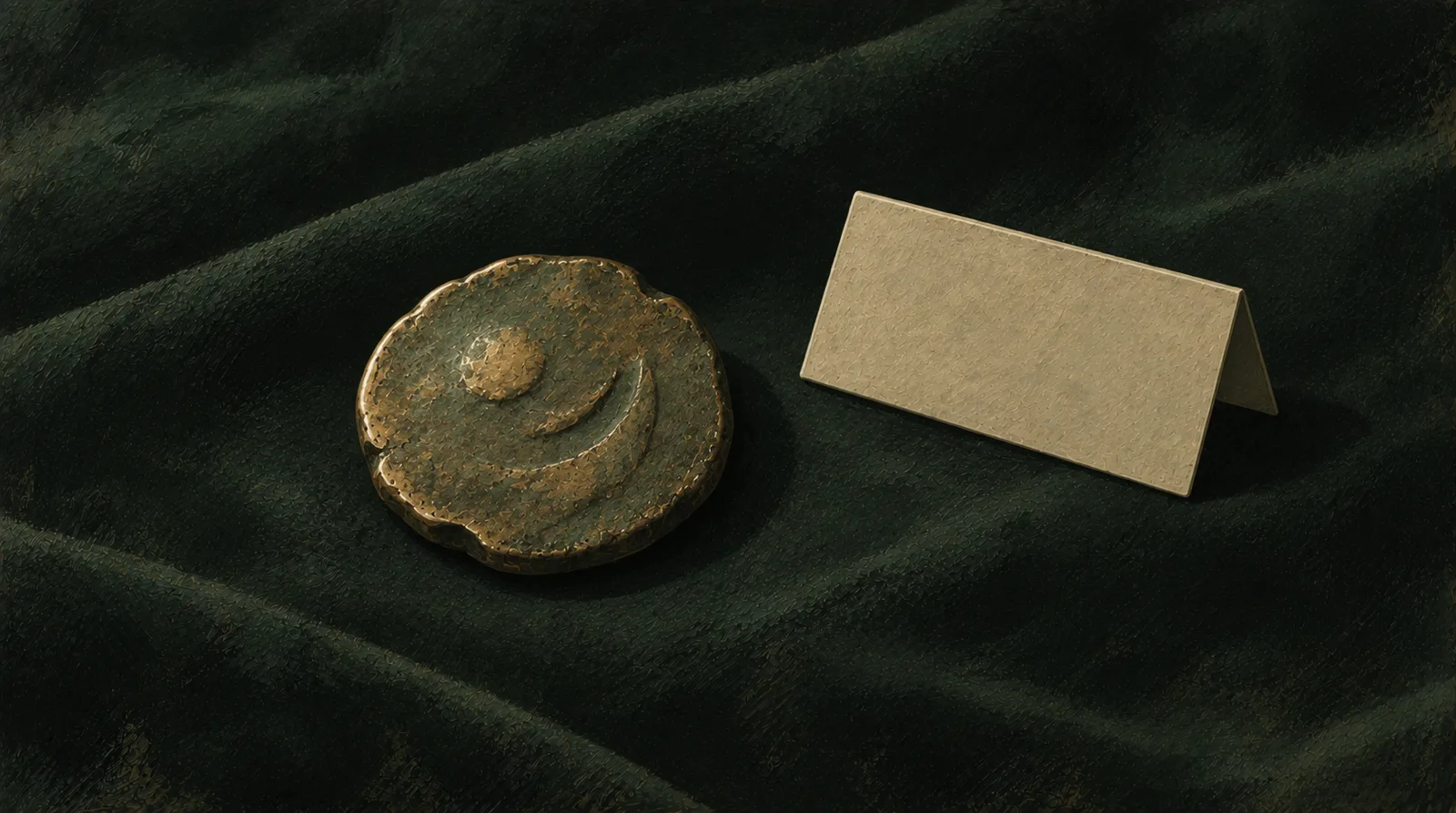
A modern coin and a Roman coin are both "identify the issue" problems, but the machinery underneath is entirely different. Modern issues were struck to published standards and live in catalogues you can look up. Ancient and medieval coins were made by hand over centuries — struck between engraved dies in the hammered traditions, cast in moulds in others — and their references are scholarly catalogues built from hoards, museum collections and excavation records.
That difference is why the honest answer to "what is this old coin from a photo?" is often a signpost rather than a name — and why the specialist routes at the end of this guide exist. This guide sets realistic expectations: what survives in a photograph, what corrosion takes away, and who to ask next. If your coin turns out not to be ancient at all, the general identification guide covers the normal method.
Why ancient attribution is different
Three structural differences change what evidence means. First, manufacture: in the hammered coinages of the Greek, Roman and medieval worlds, coins were struck by hand and dies were typically cut by an individual engraver — coins of the same type struck from different dies differ in detail, and specialists can sometimes attribute a coin to a specific die pair. Other early traditions cast instead — the ANS describes Chinese coinage evolving into cast bronze money in the round, square-holed cash form — so die-level evidence applies where striking applies. American Numismatic Society: Ancient and Medieval East and South Asia Second, documentation: there is no issuing-mint specification table; the references that matter are academic type catalogues and museum collections, such as those the American Numismatic Society maintains — the ANS describes its scope as the study of coins, currency, medals, tokens and related objects across all cultures and time periods. American Numismatic Society
Third, survival: most ancient coins that exist today spent centuries in the ground, so corrosion, mineralisation and encrustation are part of the object's story rather than damage to ignore. A modern coin's specification is a target it was struck to; an ancient coin's reference is a family of similar objects excavated over a century. That is why "identification" here means narrowing to a type or issuer family, not reading a part number.
What survives in a photo
Photographs capture exactly the evidence that still communicates at this remove — and it is more than you might expect.
- Fabric. The coin's physical character — its thickness, the shape and spread of its flan, how the metal sits — is visible in a photo and is one of the strongest early signposts. A thin, broad, slightly irregular disc reads very differently from a thick, dumpy one.
- Style. Portrait conventions, letterforms, figure poses and layout are period signatures even when individual letters are gone. A specialist can often date a coin to a reign or a century from style alone; a photo gives you enough to describe it.
- Legend fragments. Even a few letters are useful. Specialists read partial inscriptions against the limited set of words a coinage actually used — a surviving "AVG" or "IMP" or a retrograde letter narrows the field dramatically.
- Layout and type. A standing figure facing left, a quadriga, a cross dividing the field — the design's composition is diagnostic even when its fine detail is gone.
- Wear and corrosion pattern. Where the coin is worn tells a story about how it circulated and what it has been through since; heavy edge wear versus even wear says different things.
A Coin Says Hi reading works the same way here: it describes what is visibly present and offers a possible match hypothesis — useful as a description to carry to a specialist, not as an attribution. For ancient material, expect the result to name a broad family ("a Roman Imperial bronze", "a medieval English penny") rather than a catalogue entry.
What the photo carries — and where it stops
Fabric, style, legend fragments, layout and wear — enough to describe and to narrow to a family
Die attribution, metal and surface judgement, provenance context — and the references the attribution rests on
Editorial summary of the division between photo-visible evidence and specialist evidence described in the text. Evidence: American Numismatic Society; Royal Mint Museum: Enquiries.
Roman, Greek and medieval signposts
These are recognition signposts — enough to describe what you hold and choose the right specialist — not attribution rules. Every one of them has exceptions, and none of them settles a coin's identity on its own.
- Roman Imperial coins often carry a Latin legend running around a ruler's portrait on the obverse and an allegorical figure with a reverse inscription; letters you may see include IMP, AVG, CAES, COS, and SC on bronzes. Fabric runs from small thick bronzes to broad silver denarii.
- Greek coins often show a deity or civic emblem — an owl, a portrait, a patron animal — with a short legend in Greek letters, frequently on a small, thick flan. The style is the strongest signal.
- Medieval European hammered coins are typically thin, small and slightly irregular, with stylised rather than realistic portraits. A documented English example: the voided long-cross penny introduced under Henry III in 1247 ran the reverse cross to the coin's edge specifically to expose clipping — shaved ends of the cross made a clipped coin obvious. The Royal Mint: Medieval Voided Long Cross Silver Penny
- Other early coinages — Byzantine, Islamic, Indian, Chinese cast coinage and others — have their own signposts; the unreadable-script problem is usually the binding one, and the unreadable-script guide covers how to record lettering you cannot type.
Corrosion and what it hides
Burial leaves its mark — green or brown mineralisation on bronze, horn silver on silver, iron staining — and that crust often sits exactly where the attribution evidence lives. The tempting response is also the worst one: cleaning an ancient coin destroys evidence and can strip the stable patina that specialists read as part of the object. The care guide is emphatic on this point — do not clean — and it applies doubly to old coins.
Record what is visible without improving it. Photograph under angled light to catch relief beneath crust; note the colour and texture of the surface; describe rather than interpret. A specialist examining the coin — or even a good set of photos — can work with an honest record far better than with a polished surface.
The specialist reference path
Ancient attribution is a reference discipline, and the references are public. This is the escalation path when a photo reaches its limit:
- Learn the reference type. Specialists attribute ancient coins against scholarly type catalogues — for example Roman Imperial Coinage for Roman issues — which list types by emperor, reverse legend and mint. You do not need to own them to know they exist; they are what a museum or dealer consults.
- Search museum collections. The American Numismatic Society describes a research collection and free online resources covering coins of all cultures and periods — its online collection is a reference library you can browse for visually similar pieces. American Numismatic Society
- Use the Portable Antiquities Scheme where it applies. In England and Wales, the PAS records archaeological finds including coins in a public database — useful both for comparing your find against recorded examples and, if you found the coin, for the reporting route described below. Portable Antiquities Scheme
- Ask a specialist. The Royal Mint Museum runs an "Ask an Expert" enquiry route — its FAQs cover mis-strikes and unusual pieces, and the museum asks for photographs and a description by form before any examination. It does not provide valuations, which makes it an attribution route rather than a price route. Royal Mint Museum: Enquiries
- Bring a record, not just a coin. Whatever route you take, the document that speeds it up is the same: photos of both faces under raking light, the weight and diameter, any visible letters transcribed, and where and how the coin came to you. The measuring guide covers the numbers side.
A legal note for found coins
If the coin is something you found rather than bought or inherited, identification is not the only question — where and how you found it can carry legal obligations. In England, Wales and Northern Ireland, groups of coins at least 300 years old from the same find can be treasure under the Treasure Act and must be reported within 14 days; Scotland and the Isle of Man have different rules entirely. The found-coins guide lays out the routes and the reporting steps in detail — read it before cleaning, selling or exporting anything you found.
The short version: record the findspot while it is fresh, photograph before handling more than necessary, and ask a Finds Liaison Officer or your national heritage authority about the specific find before assuming it is simply yours to sell. A photo can describe the object; it cannot establish ownership or legal status.
Questions people ask
I found an old coin — is it Roman?
Possibly — the fabric, style and any surviving letters are the first clues. Record the findspot, photograph both faces, and read the found-coins guide before anything else — a found coin can carry a reporting duty depending on where you found it.
Why won't Coin Says Hi name my ancient coin?
Because a confident name often isn't honestly available from a photo of a corroded early coin — an uncertain result is the tool working as designed, not failing. A provisional match at the family level ("a Roman bronze") plus the visible clues it lists is a description you can carry to a specialist reference.
Is my Roman coin genuine?
Replicas and made-for-tourists copies of ancient types are common, and a photo cannot settle authenticity — specialists use weight, metal, surface and die evidence. Where authenticity matters, a museum enquiry or a dealer experienced in ancients is the route; the fakes guide covers the general landscape.
Should I clean the crust off to help identification?
No — the care guide is emphatic that cleaning destroys evidence, and on ancient coins the corrosion often carries the object's provenance with it. Photograph and record what is there; let a specialist decide what any surface is.
Who do I actually ask?
For a found coin in England or Wales, a Finds Liaison Officer via the Portable Antiquities Scheme. For attribution questions on British material, the Royal Mint Museum's enquiry route. For research and comparison, the American Numismatic Society's collections and resources. For authentication with money at stake, a dealer or grading service experienced in the specific coinage.
Sources and scope
The American Numismatic Society's institutional pages support the description of numismatic scope, research collections and online resources. The Portable Antiquities Scheme's site supports the England-and-Wales recording route; its Treasure pages set out the Act's application and its limits in Scotland and the Isle of Man. The Royal Mint Museum's enquiries page supports the specialist route and its scope — including that it does not provide valuations. The ANS Ancient and Medieval East and South Asia exhibit page supports the cast-coinage qualification in the manufacture section, and the Royal Mint's voided long-cross penny page supports the 1247 introduction and anti-clipping rationale in the medieval signpost. The signpost descriptions for Roman, Greek and medieval coinages are Coin Says Hi's editorial summary of common fabric and legend features — recognition aids, not attribution rules. This guide provides no authentication, provenance or legal determination, and a photo reading cannot establish ownership or legal status. Sources last checked 2026-10-01.
Spotted an error? Tell us — include the page address and what seems wrong.