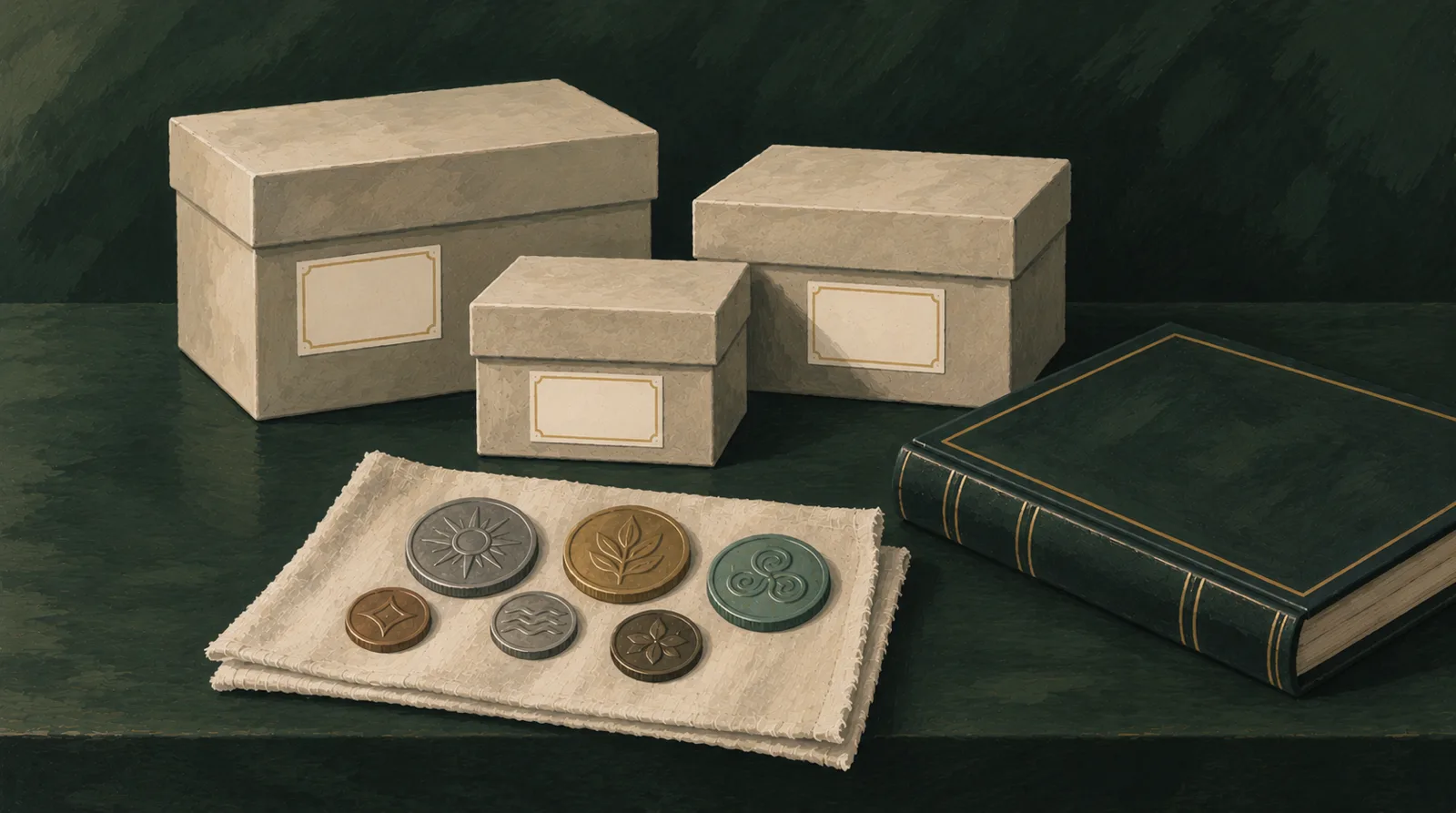
When a coin collection arrives through an estate, the pressure to do something quickly can be strong — family members ask questions, executors need answers, and the boxes take up space. The good news is that the correct first steps are slow ones. A collection that has waited years can wait another week while you document it.
This guide covers the practical first week: securing, recording, sorting and sampling. It is not an appraisal, legal advice on inheritance or a promise that the collection contains valuable coins. Estate rules and taxes vary by location; ask the estate's advisers about those questions.
Secure the collection and do not clean
Move the collection somewhere dry, stable and out of casual reach, and keep it together until it is documented. Resist the most tempting improvement of all: cleaning. The Royal Canadian Mint advises inexperienced collectors to avoid cleaning coins, including wiping them with a soft cloth, and the U.S. Mint's care guidance makes the same point — the surface a coin has now is part of its evidence. Royal Canadian Mint: Coin Care, U.S. Mint: Caring for Your Coin Collection
Cleaning feels like care but reads as damage to the specialists you may later consult. A coin that turns out to matter loses options once its surface is altered, and a coin that turns out to be ordinary was not worth the risk. Our care guide explains safe handling and storage in more detail.
If several people share the inheritance, agree early that nothing is cleaned, sold or divided before a basic record exists. That single agreement prevents most inherited-collection regrets.
Make a simple record with photos
Before you reorganize anything, photograph the collection as you found it: the boxes, albums, envelopes and handwritten notes, and the layout they arrived in. Then photograph both sides of representative coins. Keep each coin with whatever was stored around it — an envelope marked “Grandpa's silver dollars, 1978” is part of the object’s story even if its claim turns out to be wrong.
Write down where each group came from: which drawer, which box, which album page. That geography matters later, when a dealer or family member asks what is known about a piece. A short honest label such as “Found in desk drawer, envelope says ‘old foreign coins’” beats a confident guess.
You do not need special equipment. The photography guide covers a repeatable phone setup: soft side light, whole rim in the frame, one side at a time. Photograph packaging and labels the same way.
Sort into broad buckets
With a record in place, a coarse sort makes the collection legible without judging it. Four buckets cover most inherited material:
- Slabbed: coins already sealed in grading-service holders. Leave them sealed; the holder is evidence of a past assessment, not a guarantee.
- Bullion-type: bars, rounds and modern bullion coins whose interest is mostly metal content.
- World: coins from other countries or older withdrawn currencies.
- Unsorted pocket finds: ordinary circulating coins, which often make up most of a casual accumulation.
These buckets are organizational only. Do not sort by guessed value, and do not discard “foreign” or “old-looking” pieces because they are unfamiliar — unfamiliarity is a research state, not a verdict.
Four buckets, one record
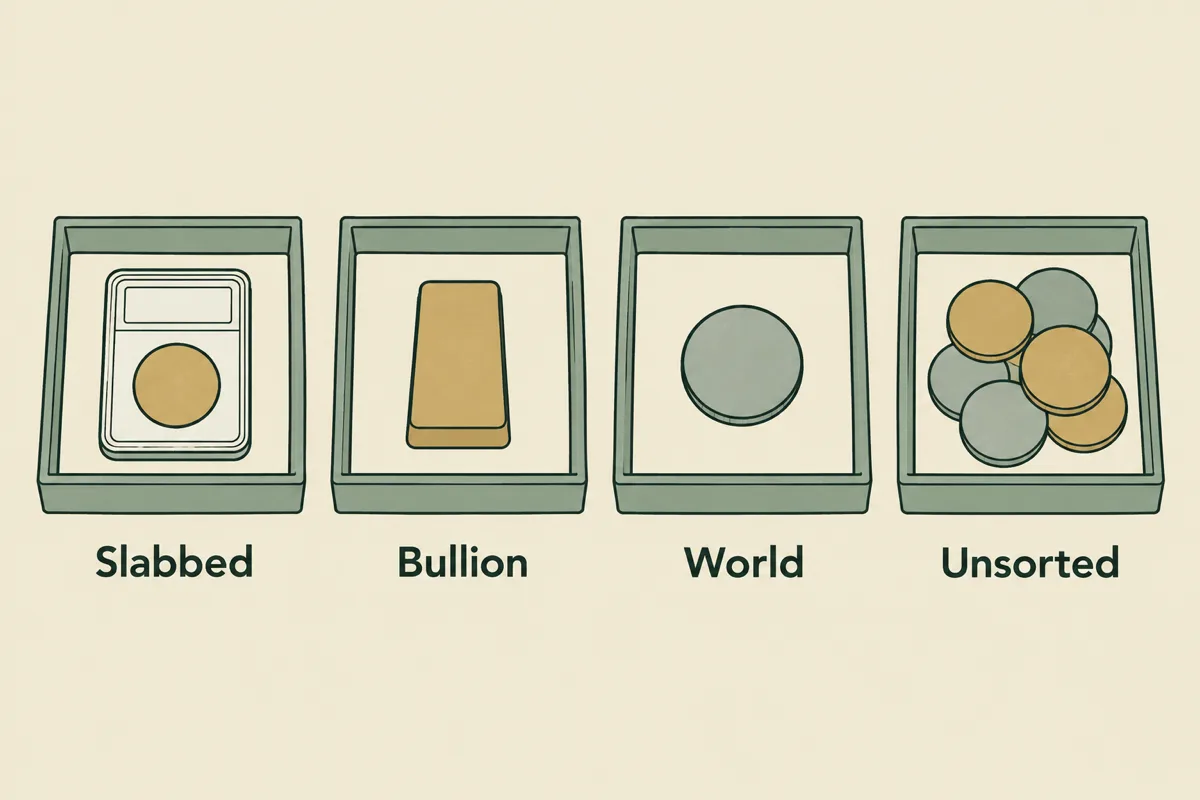
- Slabbed — sealed grading holders stay sealed and recorded
- Bullion — bullion-type pieces set aside for metal checks
- World — unfamiliar currencies grouped for later identification
- Unsorted — unsorted pocket finds kept for a quick screen
Editorial sorting aid; the buckets are organizational, not a ranking of value or rarity. Evidence: NGC: When an Inheritance Arrives in Coins; U.S. Mint: Caring for Your Coin Collection.
Identify a sample before the whole lot
Researching a hundred coins at once leads nowhere. Choose two or three representative coins from the sorted groups — not necessarily the ones that look most valuable — and work them through the identification guide: both sides, readable inscriptions, a candidate issue, then an independent reference check.
Coin Says Hi can suggest a possible match from photos, with visible clues and checks to make next. A small sample tells you what kind of collection you are holding — commemoratives, circulated currency, foreign accumulation — and which pieces deserve a professional look. A possible match is a lead to verify, not an authentication or a value.
Decide: keep, learn, or sell
Once the collection is documented and sampled, three routes open. You can keep it: the care guide covers storage that preserves options. You can learn from it: working through a parent's or grandparent's collection is how many collectors begin. Or you can sell some or all of it — the route where most inherited-collection mistakes happen.
If selling is on the table, remember that a coin dealer buys at a price that leaves room for resale, and that a first offer describes one buyer's interest, not the collection. Jeff Garrett's NGC column on inherited coins makes the same core points: do not rush, get more than one opinion, and deal with credentialed professionals. NGC: When an Inheritance Arrives in Coins
Whatever you decide about value, keep the comparison honest — our value guide explains why a matching photo or a confident listing is only the start of price research. If a buyer pressures you to decide today, that pressure is itself information.
Where to get a trustworthy opinion
Different professionals do different jobs. A dealer buys and sells; a grading service authenticates and grades without buying your coins; an appraiser writes an opinion of value for a defined purpose such as probate or insurance.
To find someone credentialed, start with a professional directory rather than a search ad. The American Numismatic Association publishes a dealer directory you can filter by location and specialty. Ask what an opinion is based on, whether the person is also buying, and what the fee covers before you hand over the collection. ANA: Coin Dealer Directory
For an estate, the executor may need a written appraisal rather than a shop-counter conversation. Name that purpose when you ask — it changes the document you should expect back.
Questions people ask
Should I clean the coins before showing them to anyone?
No. Cleaning can permanently change a coin's surface and narrow your options. Record the collection as it is; let any specialist see the true state.
The will or a note says the coins are valuable — is that proof?
Treat it as a claim to check, not a conclusion. Record who said it and when, then verify item by item against references. A family label is provenance, not pricing.
Are coins in sealed holders already certified?
A holder records a past grading decision by a particular service; it is not proof of current authenticity or value on its own. Verify the holder and its stated grade against the service's own verification route before relying on it.
How fast do I need to act?
The estate timetable is a legal and family question, not a numismatic one. For the collection itself, a careful week of documentation almost never costs anything; a rushed sale often does.
Sources and scope
NGC's inheritance column and the mint care pages support the don't-clean, don't-rush guidance. The ANA directory is a starting point for locating dealers, not an endorsement of any listed business. The sort, record and sample sequence is Coin Says Hi's editorial method. This article is not legal, tax or appraisal advice, and it does not establish what any collection is worth.
Spotted an error? Tell us — include the page address and what seems wrong.