“Get it looked at” is good advice with a missing step: looked at by whom? The coin world has at least four professional roles, and they answer different questions. Choosing the wrong one wastes a fee at best — and at worst hands a sale decision to someone whose interest is buying cheap.
This guide maps the roles and the route to each. It is not a directory recommendation or a promise about any business, and it does not replace the written professional documents that insurers and estates actually require.
Four roles people mix up
Same coin, four different questions
A market view and possibly an offer to buy or sell — never a disinterested valuation, because dealers trade for a living.
Authentication, an opinion of grade and a sealed holder — most neither value nor buy the coins they grade.
A written opinion of value for a stated purpose and date — not a guaranteed sale price or a certification of grade.
A sale venue that markets the coin to buyers — not an independent view of whether selling now is wise.
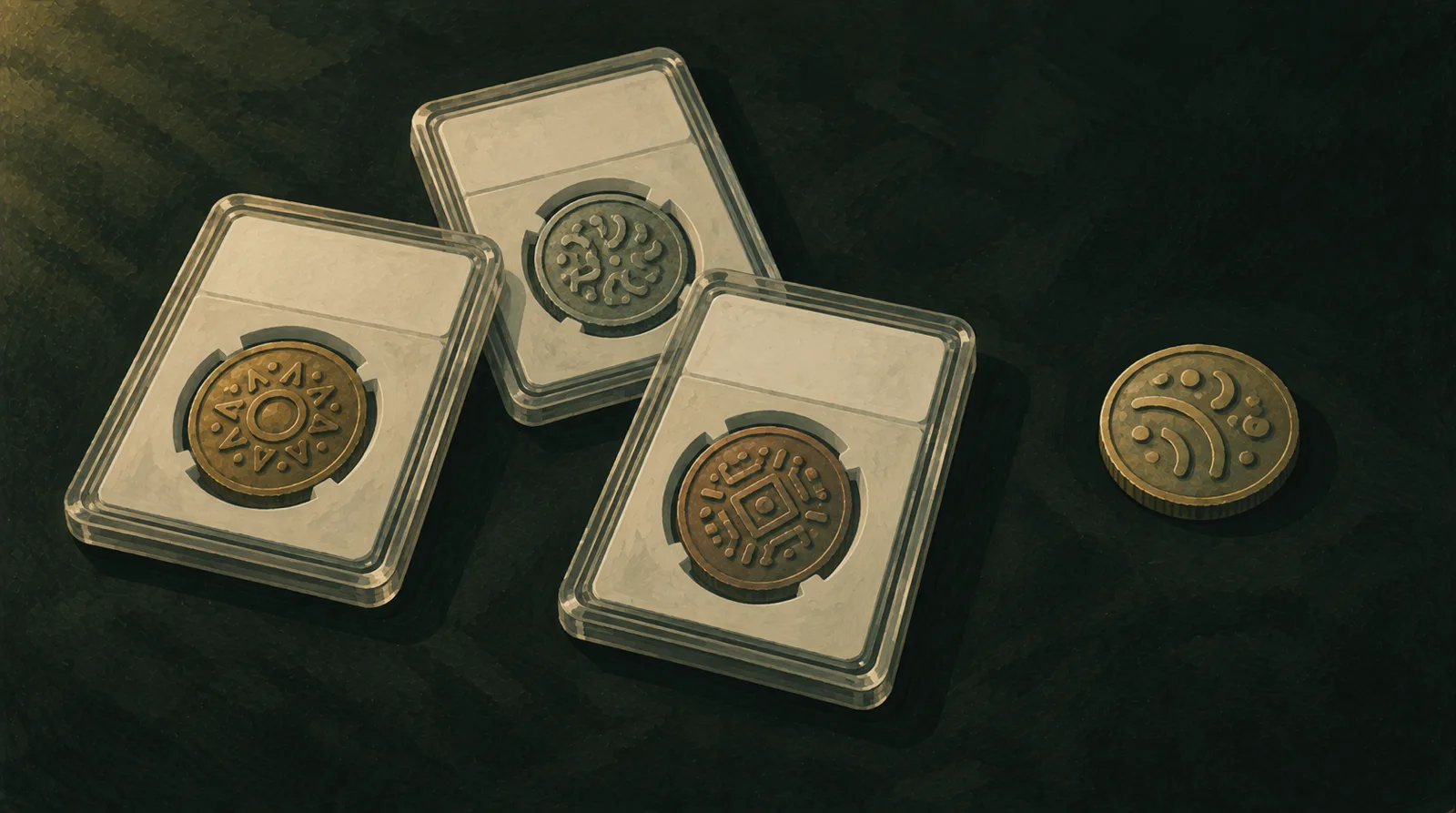
Editorial map of professional roles; no ranking or endorsement. Evidence: PCGS: Coin Grading Services; ANACS: Services; PNG: Member Directory.
Each professional has a legitimate job; problems start when one role is mistaken for another — above all, when a buyer's offer is treated as an appraisal.
What a dealer can and can't tell you
A dealer handles coins all day and can often recognize an issue at a glance, name the series it belongs to, and say how that market treats it. For identification and orientation, that experience is genuinely useful.
What a dealer cannot give you is a disinterested number. An offer to buy is a business proposal that must leave room for resale — it is information about one buyer's interest, not a measure of the collection. When the same person who would profit from the coin also tells you what it is worth, you are hearing a price with a motive attached. That is not an accusation; it is how retail works everywhere. Collect at least two independent opinions before treating any offer as the market's verdict.
What third-party grading includes
Third-party grading services authenticate a coin, assign an opinion of grade on their published scale, and seal it in a tamper-evident holder with a certification record. PCGS describes its services as authentication and grading — with submission types such as grading, regrade and crossover — and ANACS likewise describes authentication, grading and attribution among its services. Note what is absent from both: buying your coins and appraising what they are worth. PCGS: Coin Grading Services, ANACS: Services
That separation is the point of the service — the grader has no stake in your sale, so the grade means something to strangers. It is also why a grading fee buys a document, not a verdict on value: the holder says what the coin is, not what someone will pay for it. Our value guide covers what to do with that document once it exists.
When a written appraisal is the right tool
A written appraisal is a formal opinion of value prepared for a stated purpose and effective date. Insurance schedules, estate administration and probate, charitable donation and equitable division are the classic reasons — situations where a document must stand up to someone who was not in the room.
Ask for the appraisal to state its purpose, its approach and its date, and choose an appraiser who is not also bidding on the coins — the conflict-of-interest rule from the dealer section applies here too. For insurance and estate work in particular, the written document is the product; a verbal figure at a shop counter cannot substitute for it.
Finding a credentialed professional
Start from professional directories rather than ads. The Professional Numismatists Guild maintains a member directory whose listed dealers are bound by the guild's rules, and the American Numismatic Association runs its own dealer directory you can filter by area. Membership is a starting credential, not a guarantee — still ask questions before committing a collection. PNG: Member Directory, ANA: Coin Dealer Directory
Useful questions before any appointment: What does the fee cover — travel, time, the written document? Is the person buying, selling, grading or appraising here? How are records and confidentiality handled? A professional who welcomes those questions is showing you how they work; one who resists them is telling you something too.
Fees and when grading isn't worth it
Grading is priced per coin, with levels that scale by declared value and turnaround, plus submission and shipping costs — the services' own pages carry their current schedules rather than this guide quoting numbers that change. The maths that matters is simpler: the expected benefit of certification should comfortably exceed the all-in fee.
For common circulated coins, that test usually fails — an ordinary coin in a holder is still an ordinary coin, now with a paid-for plastic home. Grading earns its fee when the coin's price range makes authentication and grade commercially meaningful, when a sale needs the certificate, or when an inherited or disputed piece needs an independent determination. Our care guide covers the safer habit meanwhile: leave coins in their existing holders and record rather than reorganize.
If you are still deciding which coins deserve any fee at all, photograph a representative few for a Coin Says Hi reading and build the identification record first — a provisional match plus your notes is exactly what to bring into whichever professional conversation you choose next.
Questions people ask
Will a dealer appraise my coins for free?
A dealer may look over coins and name an offer, but a buying offer is not an appraisal — it is priced for the dealer's resale. For a written opinion of value, especially for insurance or an estate, ask an appraiser whose product is the document, not the deal.
Does grading make a coin worth more?
Grading documents authenticity and an opinion of grade; it does not create rarity or demand. A certified coin can be easier to sell because strangers can trust the holder, but the fee only makes sense when the coin's market justifies it.
Grading, appraisal, authentication — which do I actually need?
Match the document to the decision. Selling or doubting authenticity points to grading; insurance, probate or donation points to a written appraisal; choosing whether to sell at all starts with identification and a couple of independent market views.
What should I bring to the appointment?
Your photographs of both sides, any existing holders and labels, the candidate identifications and comparisons you recorded, and a clear statement of why you need the answer — sell, insure or settle an estate. A tidy record turns an expensive hour into useful answers.
Sources and scope
PCGS and ANACS describe their own grading and authentication services; the PNG and ANA directories are starting points for locating professionals, not endorsements of any member. The role map and fee framing are Coin Says Hi's editorial method. This article is not financial, legal or appraisal advice, and it names no prices.
Spotted an error? Tell us — include the page address and what seems wrong.