Documented specimen · The Met collection
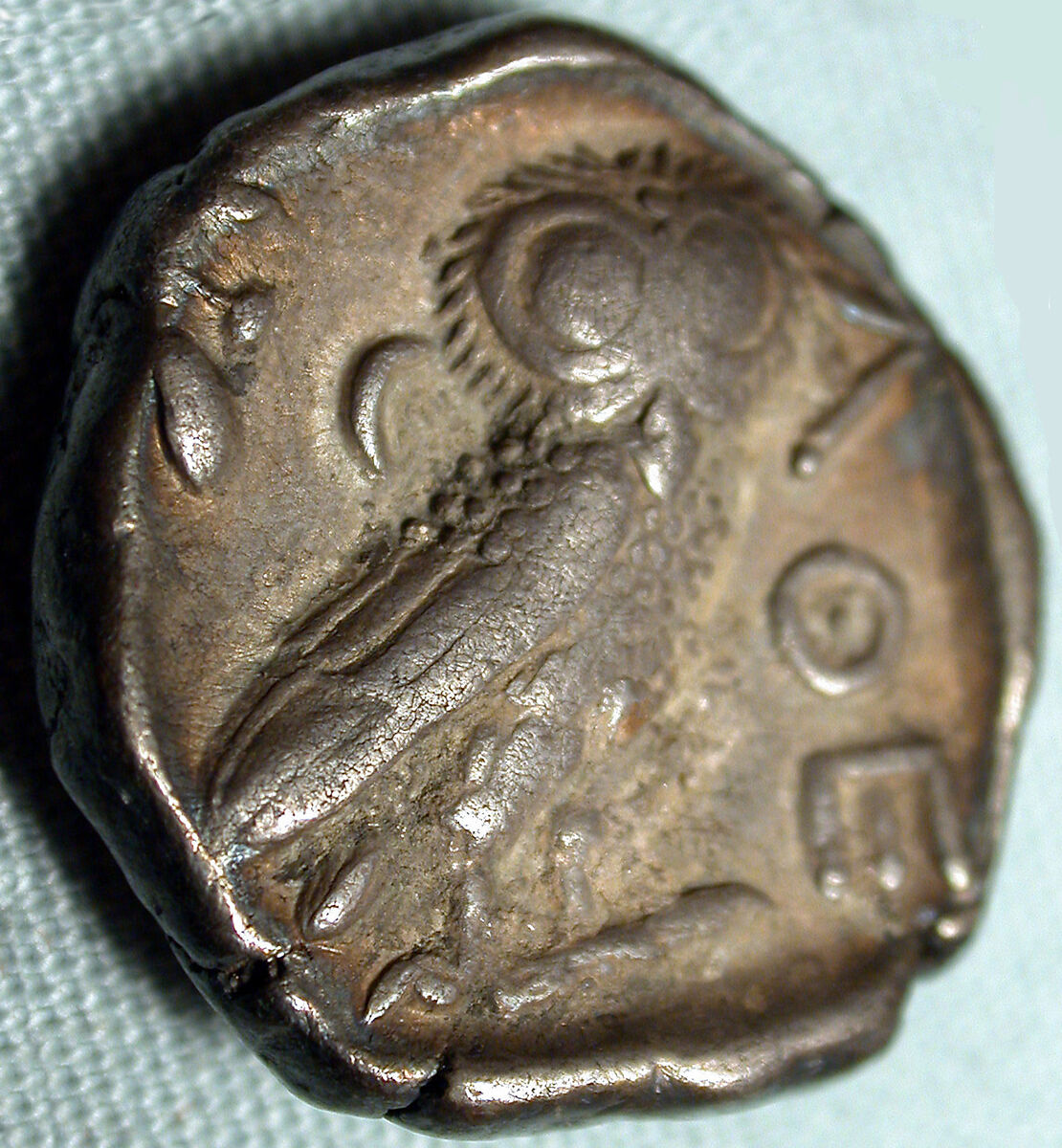
An Athenian silver tetradrachm, catalogued by The Met.
This page documents one real coin in The Metropolitan Museum of Art's collection. The catalog facts and identifications below come from The Met's catalog; the captions describe only what the collection photographs visibly show. This page is not a Coin Says Hi reading, a visitor upload, or a prior analysis.
Try your own coin photo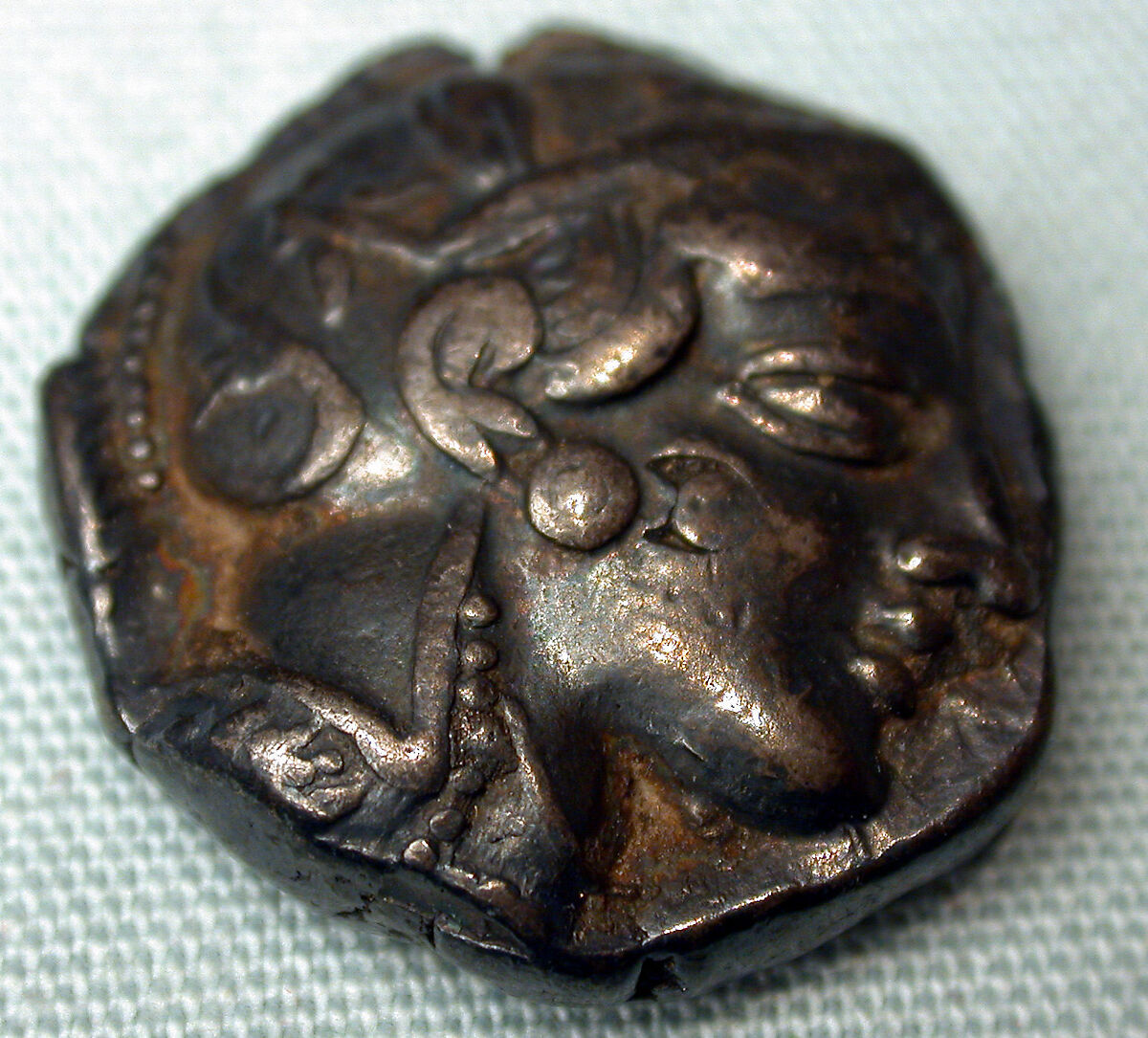
What The Met catalog records
- Object
- Tetradrachm
- Attribution
- Greek, Attica
- Date
- circa 440–404 BCE
- Medium
- Silver
- Diameter
- 24 mm
- Credit line
- Bequest of Nanette B. Kelekian, 2020
How the catalog describes it
- The Met catalog identifies the coin type's obverse as Athena and its reverse as an owl.
- The catalog explains that the tetradrachm was a high-value denomination.
What this page does not show
- This is a museum collection specimen. Coin Says Hi did not analyze it, no visitor submitted it, and this page is not a reading.
- The catalog credit line records an acquisition, not a complete ownership chain or an archaeological findspot.
- The Met's identification, date, and design description are catalog claims about this object. They cannot authenticate, grade, assess the condition of, establish the rarity of, or value this coin or any other.
- A coin photograph can support comparison; it cannot prove identity, authenticity, grade, rarity, or market value.
- These two collection photographs show one object's two faces; they do not document its edge, weight, die variety, or how the piece has worn over time.
Keep comparing independently
- Open The Met's object record and compare its catalog claims with the collection photographs.
- For a coin that resembles this type, record your own observations and compare them with an independent catalogue rather than these images.
- If authenticity, grade, or value matters, consult a qualified numismatic professional.
Further reading: Why very old coins stretch photo limits · Identify a coin from visible details
Send feedback
Share an idea, report a problem, or ask a question.